Research

From a packaged particle to a published paper.

The community funded the first year of Iowa work. The lab packaged NPC1 mRNA, restored protein in cells, and showed it in mice. That work is now in print. The road is still long. It is no longer theoretical.

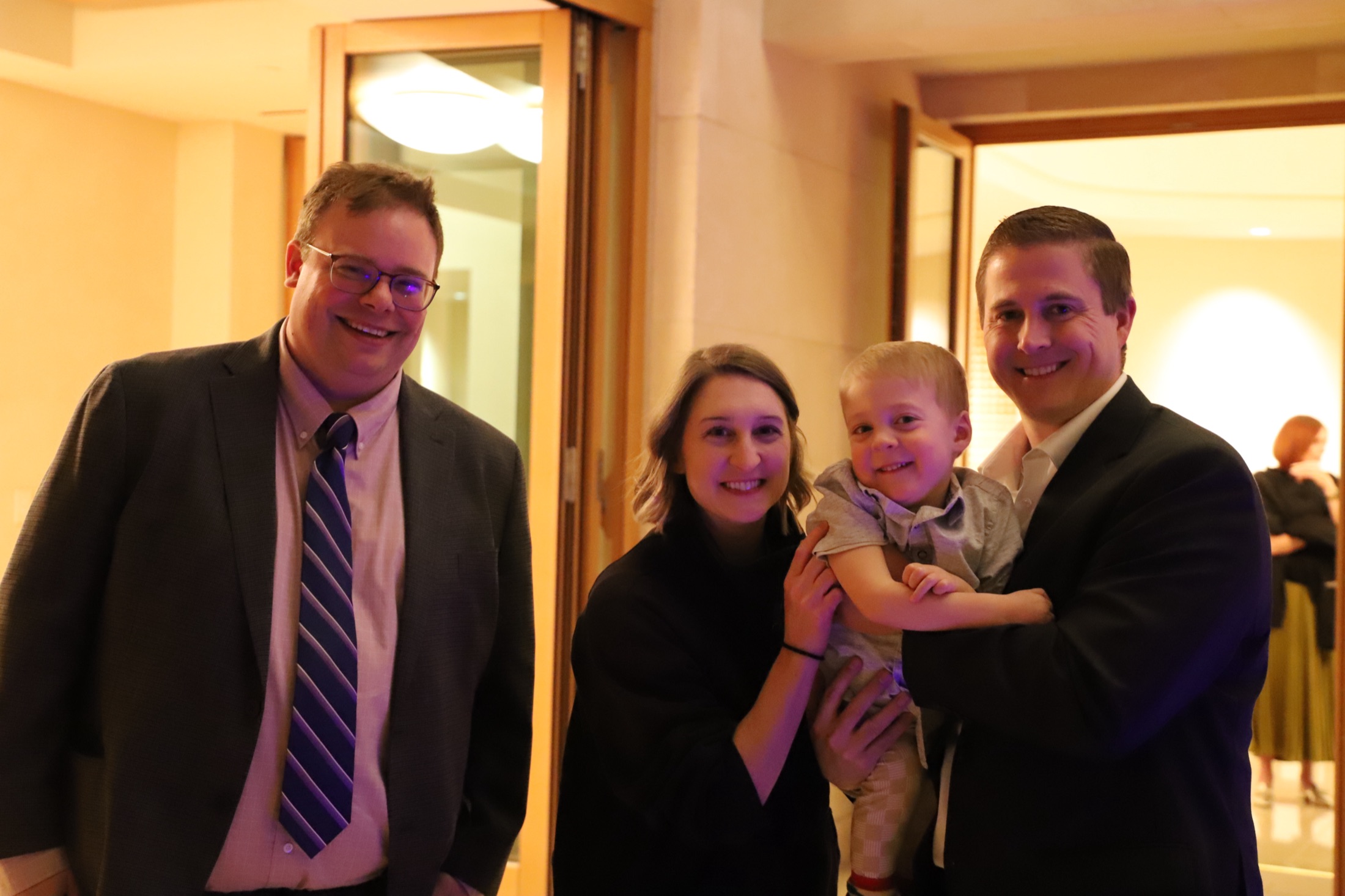
Dr. Mark Schultz with Liam and his parents
Dr. Mark Schultz with Liam and his parents. The work happens in a real lab, with real children waiting.
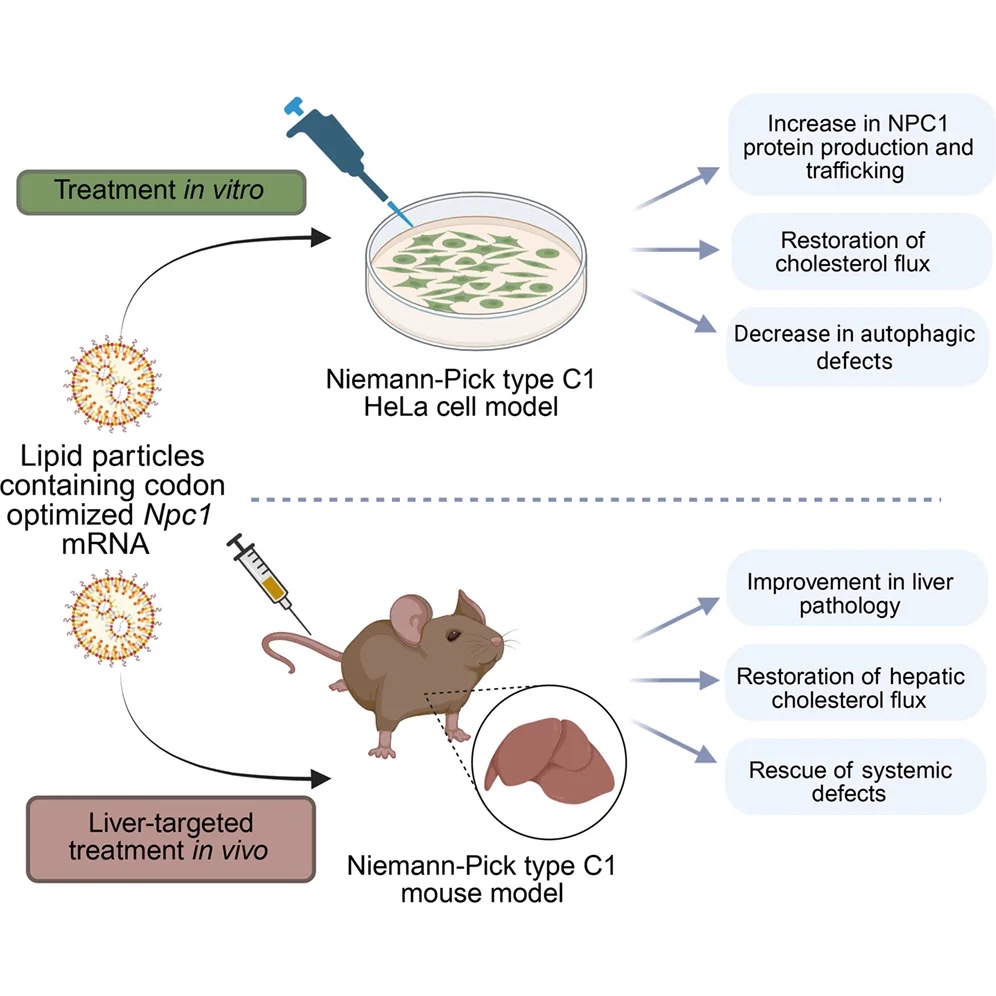
Graphical abstract: lipid-nanoparticle NPC1 mRNA restoring protein in cells and in mouse liver
From the paper. Cells first. Then mouse liver.
Published · July 18, 2026

The science we funded is in print.

Dr. Mark Schultz and colleagues at the University of Iowa Stead Family Children’s Hospital published the first mRNA therapy for NPC1 in Molecular Therapy Nucleic Acids. It is already out as a standalone article, and it will still be the featured cover of the September 2026 issue.

Koufer, Townsend, Na, Correia, Latham, et al. Corresponding author: Mark L. Schultz. Molecular Therapy Nucleic Acids. 37(3):103022. DOI 10.1016/j.omtn.2026.103022.

  • In cells, the missing NPC1 protein came back, cholesterol started moving, and autophagy improved.
  • In mice, one intravenous dose restored NPC1 in the liver, improved cholesterol handling, and shifted liver gene activity toward healthy.
  • This is liver proof-of-concept. Getting the same idea to the brain is the next stage.

This is mouse and cell work, not an approved medicine. It is the path this foundation was built to fund.

July 2023

mRNA packaged and protein restored in cells

The Schultz laboratory packaged NPC1 mRNA into a particle that can enter cells and restore the missing NPC1 protein. That opened the door to dosing studies and animal work.

December 2023

$63,000 to Schultz Lab for the mouse work

By December 2023 the community had raised $63,000 for Dr. Mark Schultz’s laboratory at the University of Iowa Stead Family Children’s Hospital. That gift funded the mouse studies of the mRNA gene-therapy path — a viable treatment packaged, tested in cells, and moved into animal work.

2024–2026

The work continues — every day still counts

While two FDA-approved medicines arrived for NPC, Life 4 Liam is still chasing a genetic solution: regular mRNA doses that could let children make the protein they were born without. Updates will appear here as the Iowa work moves forward.

July 18, 2026

Paper published in Molecular Therapy Nucleic Acids

The mouse work is now a peer-reviewed paper: Codon-optimized Npc1 mRNA corrects Niemann-Pick type C1 disease phenotypes in vitro and in vivo. It is already out as a standalone article, and it will still be the featured cover of the September 2026 issue. Read it on PMC or download the PDF.

Schultz Laboratory